

Part 6
One year after the initial application was submitted, the first of two Sterling Culinary Institutes was opened (on the South Side of Chicago) in an old, converted brick warehouse.
Nat’s insistence that the first place opened in Chicago not because of her fond memories, but more out of spite, as she didn’t want Grant to have ownership over that building, which had been the place where she almost vanished.
The building was an old, dilapidated, abandoned warehouse, covered in graffiti and with broken loading dock windows that let in no sunlight or warmth. The new building now had many large picture windows that let in natural light, stream down into the teaching kitchens with stainless steel countertops, industrial ovens, mixers, and long wooden tables, where women were learning to use their creativity through food preparation, accounting skills (keeping track of their own books for their business), dealing with hiring employees and food safety, and beginning to trust themselves again.
The day of the grand opening, Natalie stood at the podium with a beige-colored blazer on in front of an audience of donors, press members, students, teachers, and various governmental officials.
And seated in the front row, of course, was Arthur.He did not want to sit in the throne-like chair made for him. He would rather be next to the first class of students in a folding chair.
Natalie saw him and smiled. He still had on his patched tweed and ranch boots.
She spoke with no notes.
“When I opened my first bakery, I thought I was starting a new business,” she said. “I didn’t realize I was also creating a new version of me when my first business failed; I thought I had failed too. When someone I loved laughed at my dream, I thought that maybe my dream was foolish.”
The audience was completely silent.
“Dreams are not silly dreams just because an evil person laughs at them. Often, the laughter of a cruel person tells you more about them than about your dream.”
Arthur’s eyes were shining bright.
Natalie went on, “This institute is for every woman who has been told they are too old’, too emotional’, too broken’, too inexperienced’, too ordinary’, or too small. You are not too small. You are not done. The next chapter of your story does not have to be given to you by the person who did not see your value.”
Applause started very quietly but quickly became thunderous.
Later that day, the first students of the institute received their white aprons.
One of the students was a mother who had three children, and whose husband had taken all of their money before leaving them.
Another student was a military veteran who was learning how to bake after suffering from years of nightmares.
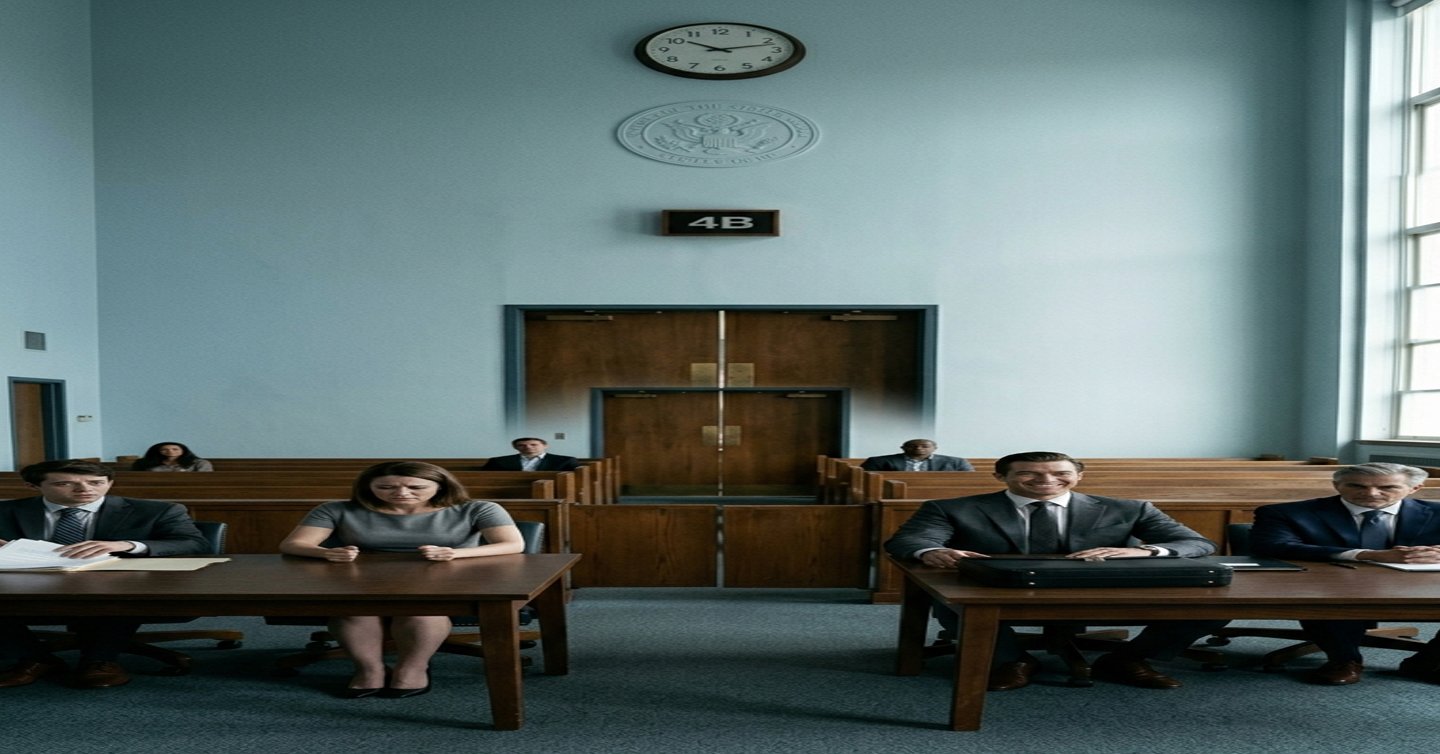
Finally, another student was a widow who had been selling pies from her own kitchen until she was shut down by the health department.Natalie strolled through the collection of people before her not as a lofty heiress but rather someone who grasps how a person would feel standing terrified before a judge while they attempt to re-write the very essence of his life.
Time marched on.
The Chicago program was a sellout.
Next was Denver.
Followed later by Seattle.
Natalie Sterling’s story was broadcast nationally although she was adamant about not allowing any reporter to focus only on Grant. Every time a reporter questioned her about revenge, she would quickly refute them.
“Revenge is too small,” She stated. “Rebuilding is bigger.”
While inside prison, one day, Grant noticed her on one of the many televisions mounted high in the communal area of the prison.
The segment showed Natalie milling through the Chicago kitchen laughing with the students as flour dusted the arm of her blazer. Below her name was a label indicating she is the “Founder & Executive Director”.
A fellow inmate, who sat near him, made a noise with his mouth.
“She is fine looking.” He looked at Grant. “You know her?”
Grant gazed blankly at the television.
For just a moment, he could picture the woman who used to sit waiting for him to return home to eat dinner. Then he could see the woman disappearing behind the dark glass at the courthouse steps. Lastly, the woman on television where she fully became herself and was no longer waiting for anyone.
“No,” Grant responded softly. “I don’t.”
This was the most truthful answer he could give.
It would be more than a few years after that day, before Grant came to a complete understanding of what punishment is.
Punishment is more than locked doors and head-counts, working on a specific task, having to eat gray-colored food and sleeping on a tiny mattress. It encompasses the gradual education of memory.He had to face the pain of realizing that the things he valued most in life were not taken from him; rather, they were given to him freely with love. When he lost the love of his wife, the trust of his father-in-law, his career, his future, and his family, he was ultimately responsible for throwing these things away.
In the beginning, Grant kept track of time by following the time intervals he spent filing appeals, receiving notices from the state for restitution, and receiving letters from his attorney. Later, he began to measure time based upon the number of books he had read, the number of classes he took and passed, and the number of letters he had written but never mailed to others. He began to work in the prison library and assisted other inmates in the preparation of various legal documents. Gradually, he began to understand that a person can be very intelligent yet be completely lacking in humility, and therefore, that person can be very foolish.
Natalie never wrote to Grant.
After enough years had gone by since Grant lost Natalie, he no longer waited for her to write him letters.
Natalie continued to be successful in her pursuits.
She expanded her work into the Institute’s National Network, providing grant funding to help women escape from financially abusive relationships. She was invited to testify before various state and Federal legislators regarding the hidden debts created by their marriages, as well as the economic control they had over their partners. She repurchased the old Highland Avenue house, not intending to live there herself, but to use the house as a transitional facility for abused women and children.
The plaque at the entrance included the following words of inspiration:
“You alone have the power to determine your own destiny.”
Grant’s name was not mentioned on the plaque because he didn’t deserve that recognition.
Like his brother Arthur, Grant continued to age over time but did not become any softer as he aged. Arthur preferred to wear cowboy boots instead of dress shoes and had a greater affection for cattle than he did for bankers.Natalie sat on a porch at Copper Creek Ranch with Arthur many evenings in the summer, gazing at the darkening mountains as they changed from blue to black during twilight.
One evening several years after their trial, she and Arthur were talking and he asked her quietly. “Do you think you should have told him your true self?”
Natalie thought for a while before answering.
Her response changed many times over the years.
Initially, she responded with “NO,” as her anger influenced her answer.
Later she responded with “NO,” as her pride influenced her answer.
Now, she sat silently looking at the valley and answered with peace.
“No,” she responded gently. “If I had told him, maybe he would have acted better. However, just because a person acts better does not necessarily mean that a person is better.”
Arthur nodded in agreement.
Below, students from the institute’s retreat to Wyoming gathered around wooden tables outside the barn sharing stories and laughter, while they enjoyed meals made with fresh fruits, vegetables, breads and freshly baked pies that enjoyed a cool breeze as they cooled after leaving the ovens.
Natalie observed them as they laughed and relaxed with each other.
Women rebuilding.
Women rising again.
Women who were once told they were nothing by someone else.
She smiled.
Grant believed he had won a divorce when he received a house, vehicles, and documents showing ownership. He mistook her tears as a sign of defeat. He laughed at her because he thought cruelty was power.
But really, the most significant power of the world was the most hidden.
As with Arthur Sterling, he was powerful because of his wealth, but he was not alone.
Natalie had as much power to create her own destiny as Arthur had to create his.
Grant Reynolds had much to learn over the years about arrogance. He pursued gold and lost a diamond. He ridiculed kindness only to learn too late that kindness was a strength.
As for Natalie, she had no time in her life to hate Grant.
She had plenty to do to create her life.
Ultimately, this was the most powerful justice of all.