

Part 5
Grant once again found himself in a federal court six months following his divorce hearing when he was expected to receive sentencing.
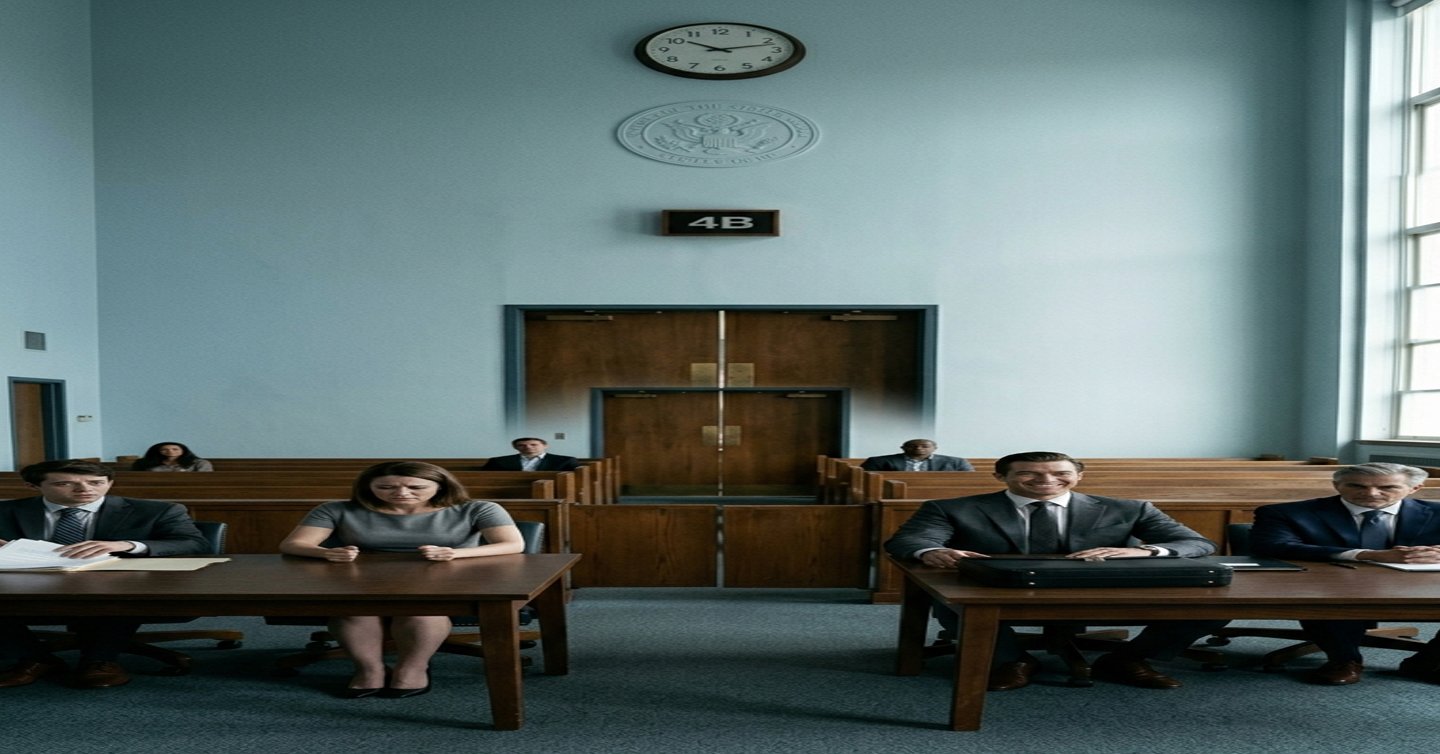
Compared to the courtroom 4B where he had the hearing, this one was larger, colder and felt more crowded than any other courtroom before now. The whole exterior of the courtroom was lined with reporters and the large gallery was filled with former Vanguard employees, while shareholders sat rigidly in their chairs, many of whom had lost all of their retirement savings due to his theft. Employees who had all lost bonuses after the company had ceased spending until the conclusion of the investigation had an opportunity to watch Grant quietly from the rear rows.
Natalie wasn’t present.
When Grant entered the courtroom, his eyes immediately searched for Natalie.
He wanted to be able to apologize directly to her face. He hoped that she might see how skinny and humbled he was, and that he would be dressed in a cheap suit with shaking hands, and perhaps a part of her would remember him as the man she had once loved.
Beneath all of that desire for an apology was something much uglier than any desire for warmth or closeness to anyone else.
He wanted to be rescued.
Even at this point and after all he’d done, part of his selfish, rotten mind still imagined Natalie standing and pleading for mercy for him in front of the judge and using her family’s power and connections to try to get him a lesser sentence.
This was a strange circumstance of selfishness.
Selfishness always knew how to appear as remorse.
Judge Miriam Halloway was the one presiding over Grant’s case and she walked into the courtroom with steel-grey hair and a face that had no sympathy for anyone who acted in any way that appeared to be performing.
Grant stood as the others in the courtroom had done but his knees were weak.
The prosecutor spoke first.
She started by describing the theft with the details of how Grant committed it in great detail. She talked about the fake vendors and the inflated shipping invoices and the offshore transfers.The company’s finances were wasted on extravagant trips, expensive jewelry, leasing of apartments for employees, and hiding the marital assets of employees in divorce cases.
Thomas Henderson was the next person to testify.
He spoke in a low voice. That, somehow, made it worse.
“You were given trust,” said Henderson to Grant from the witness stand, “You were promoted, mentored, and included in discussions that most employees never hear about; and through all this you used every chance you got to steal from those people who trusted you.”
Grant looked down at the table.
Next, a woman from accounting, Paula Greene, gave her testimony; Grant hardly recognized her, but she knew him well.
“My team worked overtime for weeks trying to fix what you did,” said Greene. “Three people lost their jobs during the freeze on the investigation. My husband asked me why I was crying while looking at spreadsheets. I told him because numbers can bleed.”
Grant closed his eyes tightly.
Mara Higgins gently placed her hand on his sleeve before she stood up to give her testimony.
Mara asked for mercy from the court while pointing out Grant’s age, his record prior to this case, his cooperation after being arrested, and his plea of guilty when it became impossible to deny the evidence against him.
Then Judge Halloway looked over at Grant.
“Mr. Reynolds would you like to make a statement to the court?”
Grant stood slowly.
He felt as if the courtroom was moving around him.
He had prepared remarks for the court that Mara helped him with. In his remarks, he expressed profound regret, failure on his part, and pain he caused to others.Seeing Natalie’s empty seat in the back row drained whatever emotion he’d managed to muster for his speech.
“I thought I was the smartest man on the planet,” he muttered.
Beside him, Mara flinched.
“I thought the only thing that mattered in life was what someone could do to help me get higher on the ladder. I thought that because my wife was kind, she was weak. I thought that rules existed for those who couldn’t win.”
He paused, almost choking on the last words.
“To say I don’t know how remorseful I feel at this moment is an understatement. At the same time, I’m glad I feel this way about myself — but it’s a terrible thing for me to say. I told so many lies to so many people, including to myself, that it has left a terrible hole in my heart. I hurt my wife. I illegally took money from my employer. When the truth surfaced, I blamed everyone except myself. I don’t expect to be forgiven.”
For the first time in so long, Grant found himself speaking honestly rather than trying to sell something.
Judge Halloway scrutinized Grant intently.
“You have made your first honest statement while in this courtroom,” the judge said.
Grant dropped his gaze.
“But after you’ve been exposed, honesty doesn’t undo the damage done,” Judge Halloway continued. “You stole not because you were hungry, nor out of desperation. You stole because you justified it to yourself that once you reached success it gave you the right to steal more. You attempted to destroy your wife’s financial future and hide your criminal activities using the civil courts. You betrayed the trust and loyalty of those closest to you.”
Each of these statements landed on Grant differently — isolated from everything else around him.Grant’s fate was sealed by the U.S. District Court for the District of Hawaii, where he pled guilty to wire fraud, embezzlement, and money laundering.
An audible commotion rippled through the gallery.
Staggering slightly from shock, Grant felt a gentle touch on his arm – it was Mara; though it was too late for her to do anything; all that could be done had been.
In addition, the court ordered Grant to pay $4,200,000 in restitution to Vanguard Logistics, affected parties, and Sterling Land and Trust; wages may be garnished in the future to satisfy this obligation.
The Judge’s gavel struck.
Immediately, Grant remembered a gavel striking in a different court.
The one in divorce court.
As the marshals immobilized Grant with handcuffs, he turned back toward the gallery one last time.
No Natalie.
No Jessica.
None of his country club friends.
No Baxter Thorne.
Only strangers, victims, and reporters in the gallery.
One day Grant realized that he had built an empire of glass and mirrors; and that even after the empire was built, it could shatter in a moment.
Three weeks later, Grant’s body was sitting in a prison transport bus on its way across the Midwest through a pale grey sky. Inside the bus, Grant sat in chains next to other prisoners, as he looked out the scratched window at empty field after empty field passing by.
Finally, as Grant looked up into the future, he could see a prison rising up out of the horizon like a monument of concrete.
There was a warning about the razor wire glittering in the sunlight.
Grant stepped off the bus with a number as an identifier instead of a name.
When he walked through the prison gates, heavy doors slammed shut behind him.
Meanwhile, in Wyoming, morning had arrived at Copper Creek Ranch.
Natalie Sterling was on the porch of the main house holding a steaming cup of coffee.The early dawn light was illuminating the Grand Tetons with hues of both purple and gold. The scents of pine trees, horses, and fresh earth filled the air
After five long years of trying to minimize her presence in Chicago to support Grant’s ego, Natalie found herself in an environment that allowed her to expand.
With her hair hanging loosely down over her shoulders and the mud on her boots, the cold air created pink cheeks. Natalie was alive again, a reality she thought was lost to time.
Arthur walked out and stood on the porch beside her.
“You did it,” he said quietly.
Natalie didn’t need to ask what he meant; she already knew.
“12 years.” Arthur continued, “Full restitution”.
Natalie looked toward the pasture that was fenced in by split rails, the horses were grazing peacefully.
She took in what he said, waiting for the sadness to settle over her.
The lonely pang of sadness came very softly, like an old song playing in some distant place.
“I used to love him,” she said in an almost whisper.
“I know,” Arthur replied, “And I think you loved who you wanted him to be.”
Arthur nodded and said, “That’s a tough ghost to let go of”.
Natalie took a long deep breath and said, “Let’s get rid of that ghost today.”
Arthur smiled gently, “Great! Because the board has approved your proposal”.
Natalie turned and faced him.
“The institute?” she asked.
“The Sterling Culinary Institute for Women, beginning in Chicago, Denver, and Seattle. Fully financed and all program decisions made by you”.
Tears began to form in Natalie’s eyes, but these tears came from strength and resilience.
These tears were washing away something that was once considered unworthy.
Grant had once referred to her bakery as childish. He had demeaned her cupcakes and belittled her business plan in front of friends by stating she was “playing shop”, while he was doing real work.The national program established by her dream would go on to assist women in their recovery process from instances of Divorce/Evil/Broke/Grief/Betrayal. It wasn’t meant to be a charitable organization for those women, but rather a means for women to become able to take charge of themselves by giving them the necessary tools (keys) to regain control over their lives.
Putting down her coffee cup, she looked out the window in the paddock and saw a black horse lifting its head up. When she looked over at Arthur, he raised one eyebrow and asked, “Aren’t you going to the office today?”
“Not yet. I think I need a little time,” was her smile as she hurried down the steps and ran out the door, laughing as the cold air hit her in the face. Her laughter echoed wildly and brightly throughout the ranch, and was nothing like the quiet, gentle giggle that Grant would put up with at restaurants.
A short time later, Natalie rode her horse across the vast expanse of the open field, with her coat billowing behind her, her eyes fixed firmly on the mountains ahead, not once glancing back behind her.